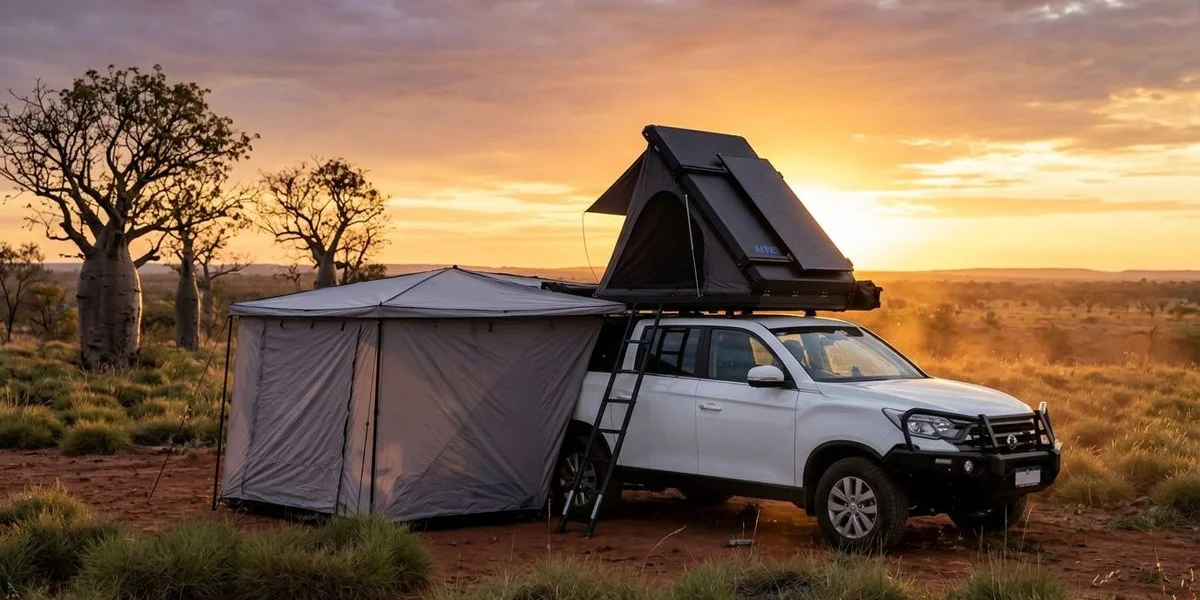
Rooftop Tent vs Ground Tent for a WA Road Trip
Compare rooftop tents and ground tents for Western Australia touring. Comfort, setup time, weather protection, and why most WA road trippers choose rooftop.

Dorian Menard
Founder & Owner
If you are planning a Western Australia road trip in a 4WD camper, the sleeping setup is probably your biggest call. Rooftop tent or ground tent, the one you pick shapes the rhythm of every single day on the road.
I’ve spent more than twelve years outfitting 4WD campers for WA conditions, and in that time I’ve heard every version of this debate, seen every kind of setup, and fixed plenty of mistakes people made before they came to us. Here is the honest comparison, built on comfort, durability, and what actually holds up out in the bush.
Setup Time and Convenience: The 120-Second Rule
The single biggest advantage of a rooftop tent is speed. Picture it: you’ve driven eight hours from Perth to Kalbarri, or rattled along the corrugated gravel into Karijini all day, and you’re cooked. Fatigue at that point is a genuine safety factor, and the last thing you want is a thirty-minute wrestle with tent poles.
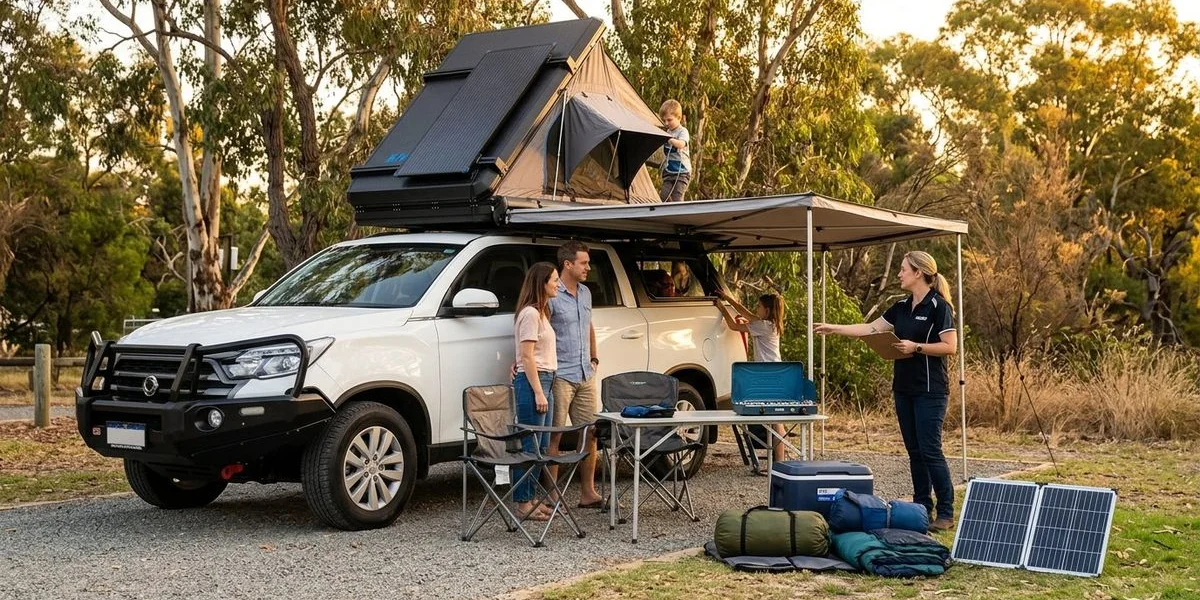
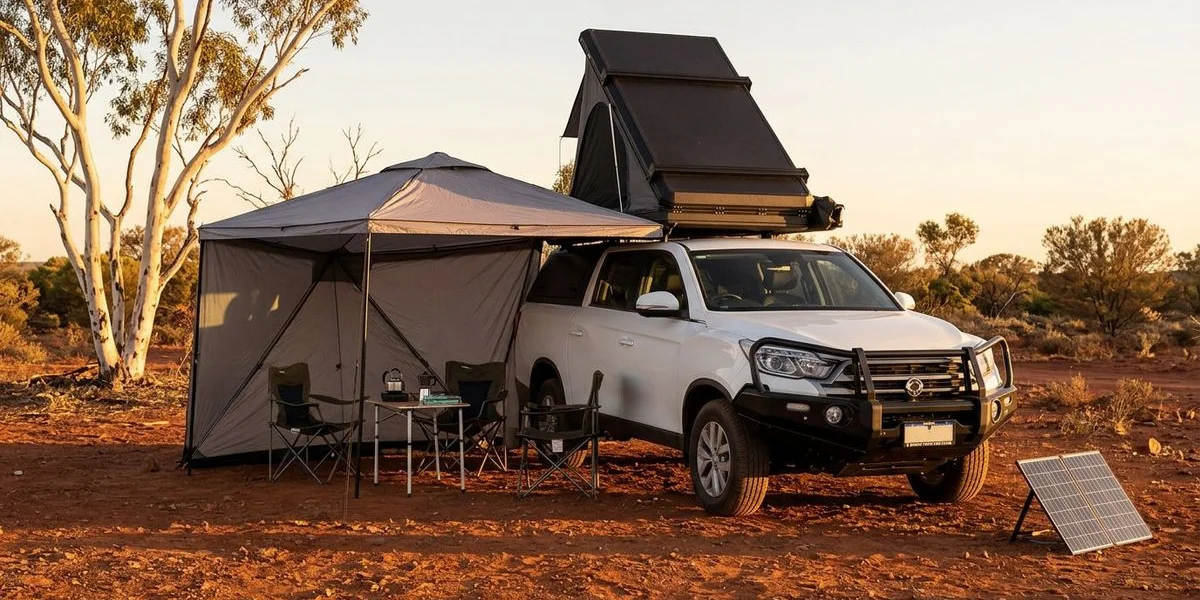
A good rooftop tent, especially the hard-shell models like the ones on our OFFGRID Wanderer, is up in under two minutes. You unclip the stainless steel latches, the gas struts push the structure open on their own, and the bed is ready to go with the mattress, pillows, and sleeping bag already laid out inside.
The Reality of Ground Tent Setup
A ground tent is a longer job, and it eats into the part of the evening you actually came for.
- Site Selection: Find a flat, debris-free 3x3 metre patch, which is harder than it sounds.
- Clearing: Clear out the sharp rocks, sticks, and bindis.
- Assembly: Thread the poles, hammer the pegs, and attach the guy ropes.
- Internal Setup: Inflate the mattresses and unroll the sleeping bags.
None of that is a big deal once. The problem is doing it every single night, which is exactly what a Coral Coast or South West itinerary asks of you.
Comfort and Sleep Quality
Sleep matters more than people give it credit for, because tired drivers are the real danger on long WA highways, not the wildlife.
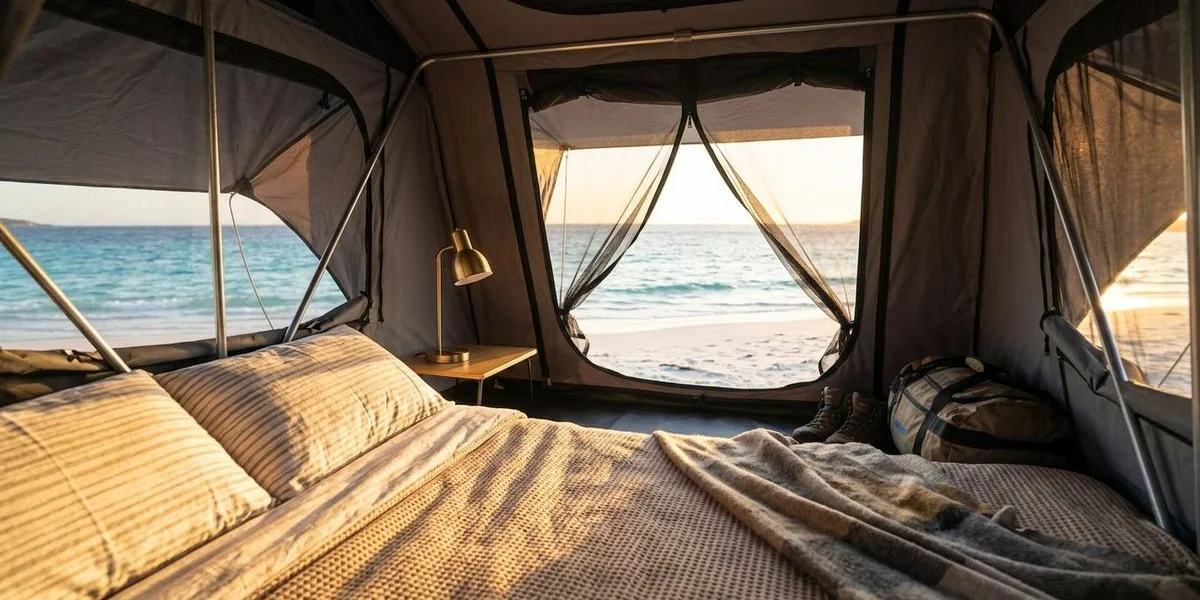
Rooftop tents come with a built-in high-density foam mattress, usually 50mm to 75mm thick, sitting on a solid flat base. That’s support close to a basic home mattress, and a world away from lying on the dirt.
Insulation and Airflow
A ground tent means you bring your own sleeping mat or swag, and even a good self-inflating mat struggles to hide the hard limestone ground you get all through the South West. Temperature is the other thing people underrate.
- Heat: Being 1.5 metres off the ground captures the cooling coastal breezes that ground tents miss.
- Cold: During winter in the Great Southern, the elevated base insulates you from the cold earth, which can suck body heat away 50 times faster than air.
Weather Protection: Handling the “Southerly Buster”
WA throws everything at you: blazing sun, horizontal rain in the South West forests, and the “Southerly Buster” winds that come barrelling up the coast.
Rooftop tents are built as one integrated system to take that kind of punishment. The canvas is usually 280g to 320g ripstop poly-cotton, which is far heavier and tougher than the 75D polyester in a standard hiking tent.
Wind Stability Comparison
| Feature | Rooftop Tent | Standard Ground Tent |
|---|---|---|
| Wind Rating | Often rated for 60-80 km/h gusts | Usually 30-40 km/h before pole stress |
| Waterproofing | 3000mm+ waterhead rating | 1500mm-2000mm average |
| Peg Requirement | None (bolted to vehicle) | Essential (struggles in sand/rock) |
A cheap festival tent will fold on you during a windy night in Exmouth, no question. A proper expedition ground tent can handle the weather, but it often costs as much as a rooftop unit and takes four times as long to pitch, so you’ve paid more to do more work.
Ground Conditions and Wildlife Risks
This is where WA conditions really decide the matter for you. So much of the state’s best camping sits on red pindan soil, soft coastal sand, or rock-hard limestone. Finding a genuinely flat patch for a ground tent is a hassle, and we watch travellers come back with bent pegs every season after trying to hammer them into the concrete-like ground of the Pilbara.
The Wildlife Factor
WA has a fair few creatures you’d rather not share a tent floor with at night.
- Ants: Bull ants and meat ants are aggressive and turn up in plenty of campsites.
- Centipedes: The Giant Centipede (Scolopendra) is common up north and the bite genuinely hurts.
- Reptiles: Snakes and scorpions are out there across the outback.
Sleeping a metre and a half up takes you out of the ground-level traffic completely. I won’t oversell the risk, most of these things want nothing to do with you, but the peace of mind of being off the dirt is real, and it matters most to overseas visitors and families who aren’t used to it.
The Ground Tent Advantages
It would be dishonest to pretend a rooftop tent wins every time. There are three situations where a ground tent is the better call.
1. Base Camping Flexibility
If you’re parking up in one caravan park for a week, a ground tent lets you drive off for the day without packing up camp. A rooftop tent ties your vehicle to the site until you fold it down, which gets old fast when you want to nip into town.
2. Remote Hiking Access
A ground tent goes where the vehicle can’t. If you’re hiking into a remote stretch of the Bibbulmun Track, the rooftop tent is staying with the car, so a packable ground tent is your only option.
3. Large Groups
A rooftop tent comfortably sleeps two adults. A family of four or five will usually need a ground tent or swag alongside it to fit everyone in, so for bigger groups the two setups end up working together rather than competing.
Which Is Better for WA?
For most WA road trips, the rooftop tent is the easier choice by a fair margin. The big itineraries, Perth to Exmouth, the South West loop, a Karijini run, all have you moving every one or two days. Fast setup, a proper mattress, and getting up off rocky ground is exactly what that kind of travel needs.
Ground tents still earn their place for committed hikers, and for budget-minded travellers who already own good camping gear and don’t mind the nightly pitch.
Our Recommendation
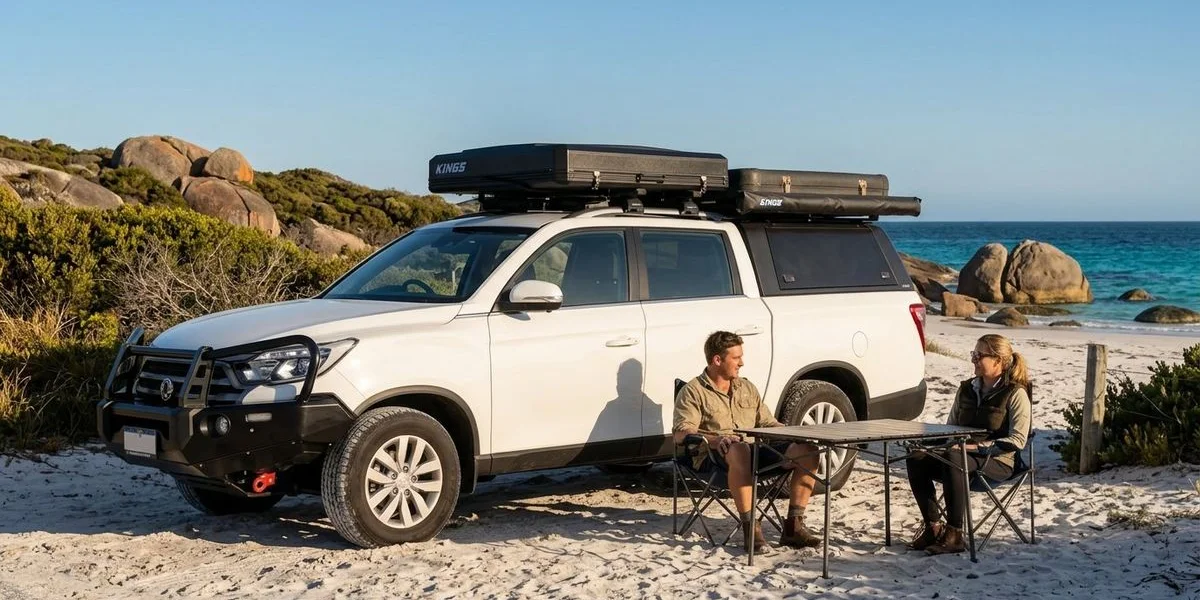
Every vehicle in our 4WD camper hire Perth fleet comes fitted with a quality rooftop tent as standard. That call came from years of feedback from customers driving everywhere from Ningaloo to the Nullarbor, and it’s simply the setup that holds up best to WA conditions.
You get a reliable night’s sleep and a two-minute pack-up, which adds up to more daylight spent out in the country instead of fighting with tent poles.
Not sure which vehicle configuration suits your itinerary? Get in touch and we’ll talk it through.
Ready to Start Your Adventure?
Premium 4WD campers from $160/day. Depot pickup in Cloverdale, 5 minutes from Perth Airport.
Check Availability