How Much Does 4WD Camper Hire Cost in Perth? 2026 Price Guide
A transparent breakdown of 4WD camper hire costs in Perth for 2026. Daily rates, km charges, insurance excess, and how to avoid hidden fees.

Dorian Menard
Founder & Owner
Pinning down a budget is one of the most frustrating parts of planning a Western Australian road trip. We hear it constantly. You spot a “daily rate” on a website, then the real quote lands hundreds of dollars higher.
That’s a fair worry whether you’re managing a holiday budget or a business expense. Hire pricing in Perth swings hugely on the age of the vehicle, the season, and the fine print buried in the rental agreement.
So here is the honest 2026 breakdown, with the real numbers you need to plan against.
Daily Hire Rates
The daily rate is your baseline, and it moves a lot with supply and demand. For a fully equipped 4WD dual-cab ute (a Toyota Hilux or Ford Ranger, say) with a rooftop tent, fridge and recovery gear, here is where the 2026 Perth market sits.
| Season | Typical Daily Rate | Market Context |
|---|---|---|
| Peak (April-October) | $189-$299/day | Dry season in the north. School holidays book out 6-9 months ahead. |
| Shoulder (March, November) | $149-$229/day | Risk of heat or early rains, but significantly cheaper. |
| Off-peak (December-February) | $119-$189/day | Extreme heat in the north. Best for South West trips. |
Those figures assume a standard 7 to 14 day hire. Short hires of 3 to 5 days nearly always cop a “short hire surcharge,” adding 15 to 25 per cent on top of the daily rate.
Understanding Seasonal Shifts
WA’s peak season is set by the weather above the Tropic of Capricorn. The dry runs April to October, and it’s the only sensible window for Karijini and the top of the Coral Coast.
Travelling over the July school holidays? Book well before Christmas. Availability for those weeks disappears faster than any other time of the year. Heading to Margaret River or Esperance instead? The “Off-peak” summer rates are genuinely good value on high-end vehicles.
What Should Be Included in the Rate
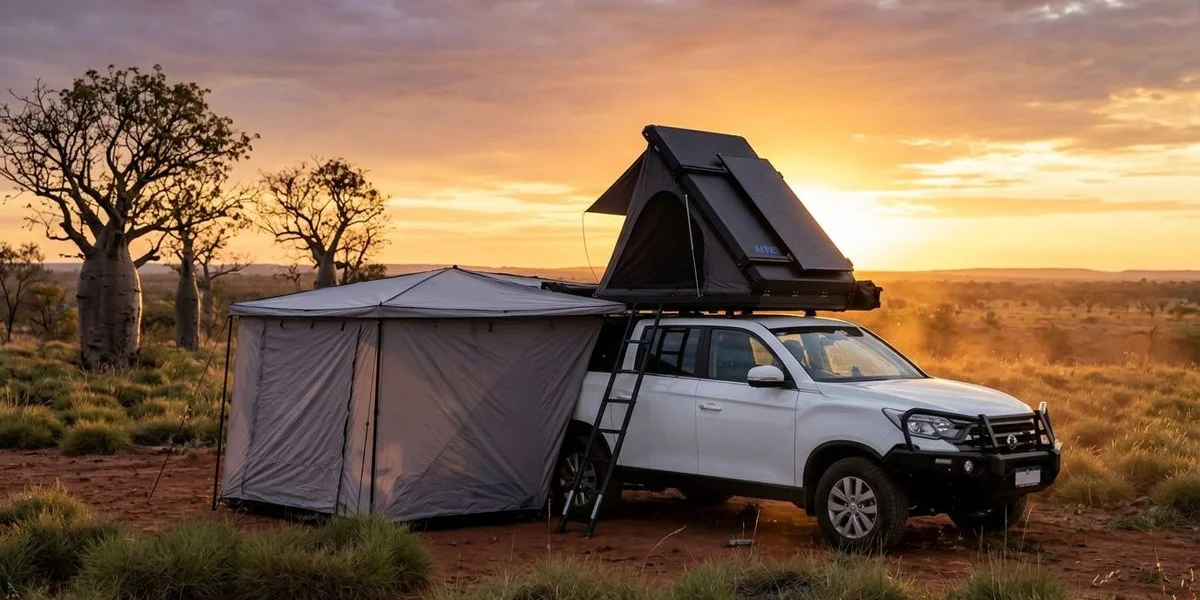
A low daily rate often hides a stripped-back vehicle. A “ready-to-go” 4WD camper hire in Perth should bundle the essentials in, not nickel-and-dime you with itemised fees.
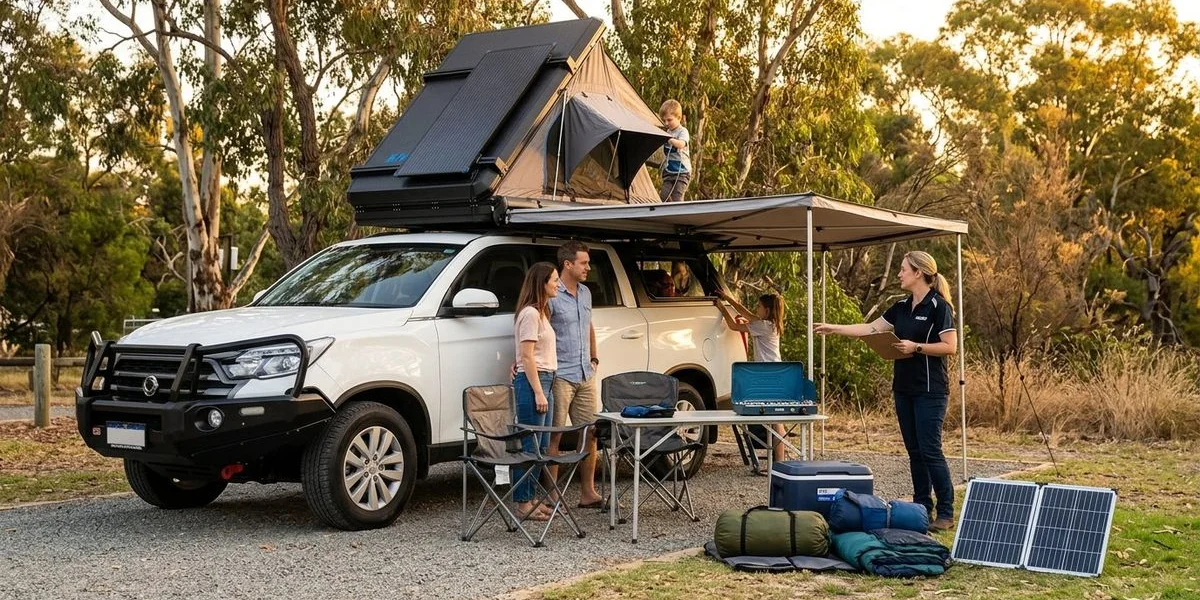
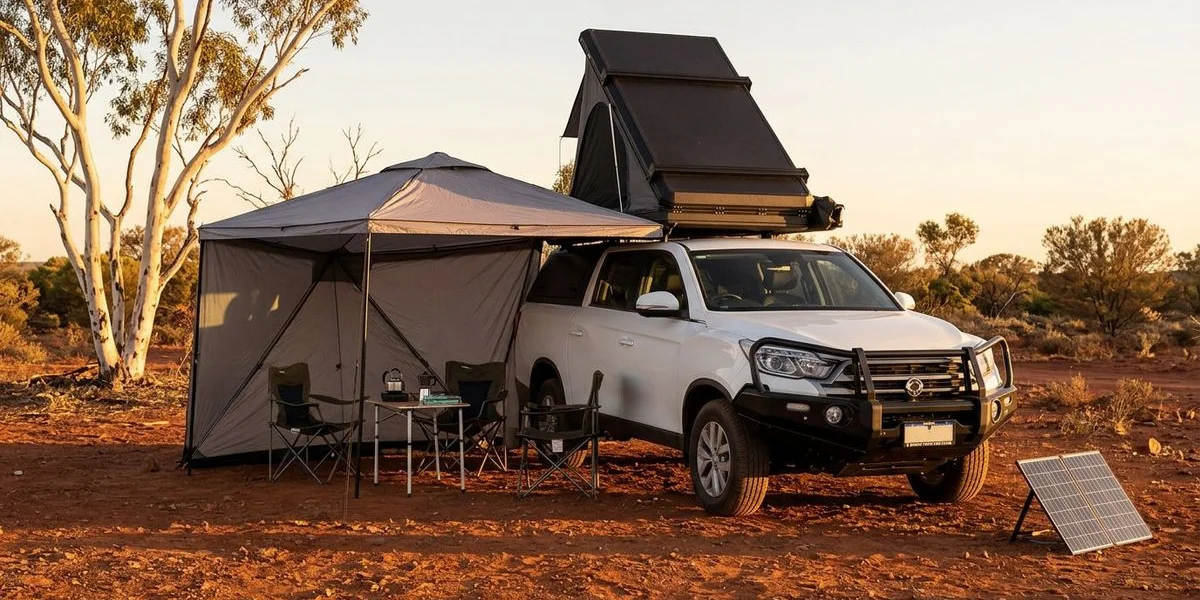
A reputable Perth operator usually folds the following into the standard daily rate:
- Sleep System: Rooftop tent with high-density foam mattress, pillows, duvet, and linens.
- Refrigeration: A 40L+ fridge/freezer (brands like Engel or Dometic) powered by a dual battery.
- Kitchen: Two-burner gas stove, 2kg-4kg gas bottle, cast iron or steel cookware, and decent cutlery.
- Shelter: A 270-degree or straight awning for sun and rain protection.
- Furniture: Sturdy camp table and chairs (not the cheap plastic ones).
- Safety Tech: UHF radio for communication on country roads.
- Recovery Gear: Maxtrax (or similar recovery boards), snatch strap, shovel, tyre deflator, and compressor.
- Water Storage: Minimum 20L to 40L capacity, often integrated into the vehicle body.
Hidden “Add-On” Costs to Watch
Some budget operators pull these items out to advertise a lower base rate. We’ve seen quotes where the fridge adds $35/day and the recovery gear another $15/day.
Do that maths and a $149 rate is suddenly $199. Always ask for the “all-inclusive” price when you compare quotes, so you’re comparing apples with apples.
Kilometre Charges
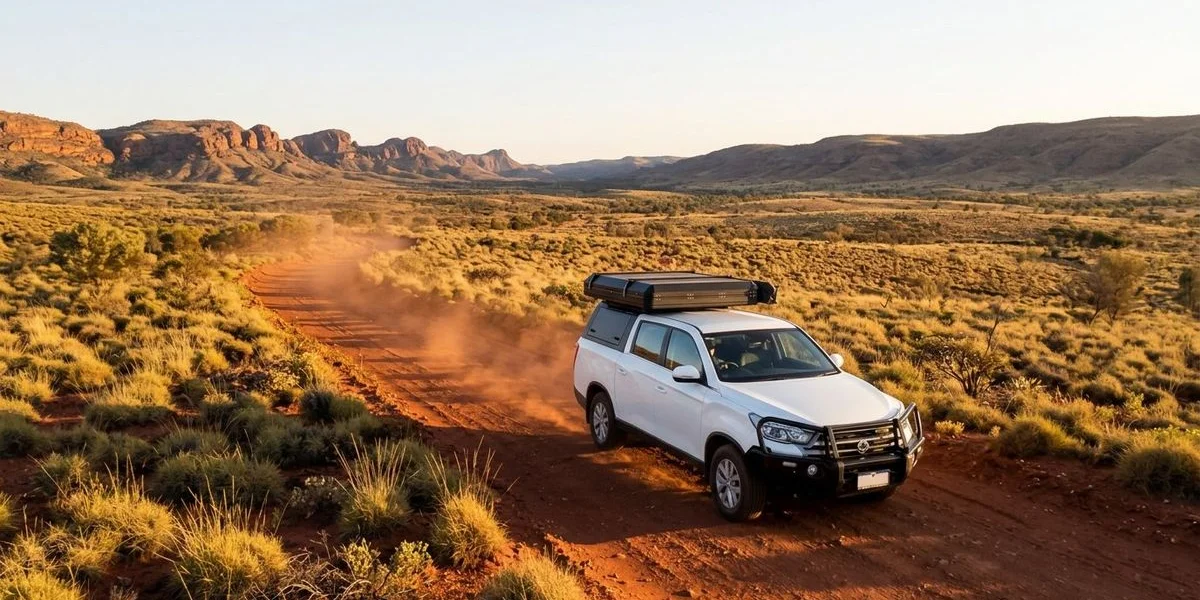
This is the line item that blindsides the most travellers. Western Australia is big, and the kilometres stack up fast.
You’ll run into three common billing models:
1. Unlimited Kilometres
This is the one to want for WA touring, and for any trip north of Geraldton I’d push hard for it. You pay the daily rate and drive as far as you need without ever watching the odometer. A standard Perth to Exmouth return is roughly 2,500km before you’ve done a scrap of sightseeing, so unlimited kills the “distance anxiety” outright.
2. Daily Caps with Excess Charges
Many companies cap you at 200km or 300km per day. Excess charges typically land between $0.25 and $0.35 per kilometre.
Consider a 14-day Coral Coast and Karijini trip covering 4,500km total.
- Allowance: 14 days x 300km = 4,200km.
- Excess: 300km x $0.30 = $90 extra.
3. Total Trip Caps
Some contracts hand you a bulk allowance, say 3,000km for the whole booking. That gives you room on big driving days, but it only works if you’ve mapped your route firmly in advance.
For 90% of WA itineraries, unlimited kilometres is the smart money. A small upfront saving isn’t worth the risk of being hit with hundreds in excess fees at the end of the trip.
Insurance Costs and Liability
Standard insurance usually comes with the daily rate, but the financial risk still lands on you. The standard excess, the amount you’re up for if something gets damaged, normally runs $3,000 to $5,000.
Most operators sell “Excess Reduction” tiers to bring that down:
| Option | Daily Cost | Your Liability (Excess) |
|---|---|---|
| Standard Risk | $0 (Included) | $3,000-$5,000 |
| Mid-Tier | $25-$35/day | $500-$1,500 |
| Max Cover (VIP) | $39-$55/day | $0 (Nil) |
The “Single Vehicle Rollover” Clause
Read the Product Disclosure Statement (PDS) carefully on single-vehicle accidents. Plenty of standard policies exclude single-vehicle rollovers and underbody damage, even at the highest level of cover.
Corrugated gravel like the Karijini gorge roads throws up risks you won’t meet on the bitumen. Check your policy spells out cover for:
- Windscreen and tyre damage (one shredded tyre can cost $400+).
- Undercarriage damage from rocks.
- Towing costs from remote locations (which can exceed $1,000).
Is There a Bond?
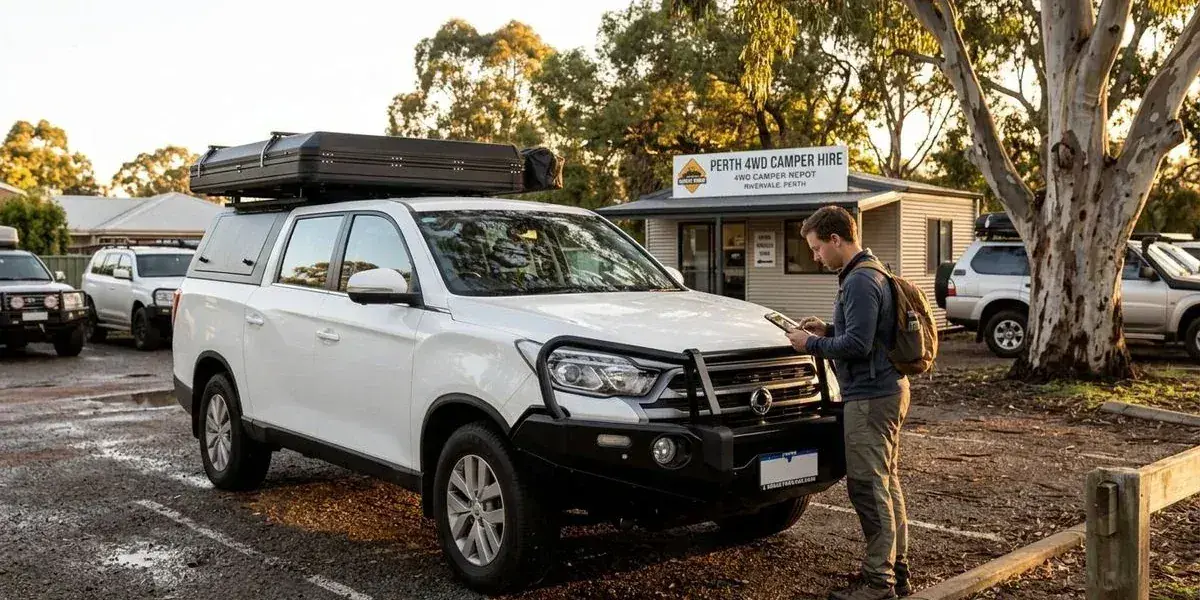
Many hire companies hold a bond on your credit card to cover potential damage, fuel shortages or cleaning fees. There is no cash bond on our campers. Insurance, excess and roadside assistance all run through Camplify under Camplify’s standard rules, and Camplify explains the excess options on its accident excess page.
The Credit Card Surcharge Trap
If you are comparing operators that do take a bond, watch the transaction fees. If an operator actually charges the bond rather than running a pre-auth, then refunds it, you can be out the 1.5% to 3% credit card surcharge.
On a $5,000 bond, a non-refundable 2% surcharge is $100 gone for nothing. Ask flat out whether the bond is a “pre-authorisation” (which usually dodges the fee) or a “charge.”
Fuel Costs
After the hire itself, fuel is your biggest expense. Prices through 2026 look set to stay high, and they climb the further out you go.
Use the WA Government’s FuelWatch website to track daily pricing.
- Perth Metro: $1.70 - $1.90 per litre
- Geraldton/Kalgoorlie: $1.90 - $2.15 per litre
- Remote Roadhouses (e.g., Nanutarra, Auski): $2.30 - $2.80+ per litre
Real-World Consumption
A fully loaded 4WD with a rooftop tent has the aerodynamics of a brick. A factory-spec ute might claim 8L/100km, but loaded up as a camper it’ll realistically burn 11L to 13L/100km.
The Math: Over a 3,000km trip averaging 12L/100km, you will use 360 litres. At an average of $2.20/L, budget $792 for diesel. Don’t forget AdBlue for modern diesels; a 10L tank lasts about 5,000km but costs roughly $20-$40 to refill.
Total Cost Example
For a realistic benchmark, here’s a full costing for a 14-day “Coral Coast” trip in peak season (July 2026).
| Expense Item | Estimated Cost |
|---|---|
| Vehicle Hire (14 days @ $229/day) | $3,206 |
| Excess Reduction (VIP Cover @ $45/day) | $630 |
| Diesel (3,000km @ $2.20/L) | ~$792 |
| WA Holiday Park Pass (4 weeks) | $70 |
| Campsite Fees (Mix of stations/parks) | ~$400 |
| Total Trip Cost | ~$5,098 |
That works out to roughly $364 per day covering your transport, accommodation and kitchen in one.
Put that against a standard SUV ($100/day) plus motels ($200/night) and eating out ($100/day), and the 4WD camper still comes out as a cost-effective way to reach the best parts of the state.
How to Get the Best Value
A bit of planning can shave hundreds off your total bill. These are the moves that work:
- Book 6+ Months Ahead: Peak-season vehicles go first and the sharpest rates go with them. Booking half a year out is the single biggest saving on this list.
- Travel in Shoulder Season: A trip in early May or late September often saves 15% compared to July, with fewer crowds.
- Check for “Long Hire” Discounts: Hires of 21 days or more often attract a 5-10% discount on the daily rate.
- Buy the WA Park Pass Online: The 4-week “Holiday Pass” is much cheaper than paying entry fees at individual parks like Karijini or Cape Range.
Want a straight quote with no guesswork? Get in touch. We’ll give you one figure that covers the vehicle, the gear and the kilometres, so you can spend your time on the map instead of the spreadsheet.
Ready to Start Your Adventure?
Premium 4WD campers from $160/day. Depot pickup in Cloverdale, 5 minutes from Perth Airport.
Check Availability