Mobile Phone Coverage in Western Australia: What to Expect
Where you will and won't have mobile coverage on a WA road trip. Telstra, Optus, and Vodafone coverage maps plus offline alternatives.

Dorian Menard
Founder & Owner
You know the feeling. You’re cruising along the Indian Ocean Drive, you go to upload a photo, and the signal bars just vanish. It happens to the best of us.
We see it constantly with rental customers who assume their city plan will work out bush. The honest answer is that Western Australia is the worst-covered state in the country for mobile signal. That’s not a dig at the telcos. It’s the reality of covering 2.6 million square kilometres with a population of only 2.8 million, most of whom live in Perth.
Here is a realistic breakdown of what to expect from each carrier, where the dead zones are, and how to prepare for stretches without any coverage at all.
The Three Carriers Compared
Telstra
Telstra has the best coverage in WA by a significant margin. If you can only have one SIM card on your trip, make it Telstra. Their network covers approximately one million square kilometres more than any other provider. The 3G network shutdown is now complete as of late 2024, so your device must be 4G VoLTE compatible to make calls, including to Triple Zero (000).
If you’re buying a new phone for the trip, look for the “Blue Tick” certification. That’s Telstra’s rating for handsets with better antenna sensitivity, the ones that hold a signal longer out in the fringe areas where it matters most.
Key areas where Telstra works and others don’t:
- Sections of the Indian Ocean Drive between Perth and Geraldton
- Parts of the highway between Carnarvon and Exmouth
- Most of the Great Eastern Highway towards Kalgoorlie
- Coverage pockets through the Pilbara region
Optus
Optus is the second-best option for WA travel. They have invested heavily in their “Living Network” and recently upgraded hundreds of towers in regional hubs to 5G+. Optus works reliably in Perth, the South West, and most regional centres, but coverage becomes patchy once you are between settlements on the Coral Coast.
Vodafone (now part of TPG)
Vodafone has historically been the weakest choice for WA, but that changed significantly in early 2025. Thanks to a new regional network-sharing agreement (MOCN), Vodafone customers can now roam on Optus towers in regional areas. This effectively doubles their landmass coverage to around 1 million square kilometres. While still not equal to Telstra for deep outback travel, Vodafone is no longer a “metro-only” option.
| Carrier | Best For | Regional Performance | 2026 Status |
|---|---|---|---|
| Telstra | Remote & Outback | Excellent | Essential for the North West |
| Optus | Coastal & SW | Good | Reliable in towns, gaps on highways |
| Vodafone | Budget Travellers | Moderate | Now uses Optus towers in regions |
Coverage by Popular Road Trip Route
Perth to Margaret River (South West)
Coverage: Good to excellent
This is the best-covered route in regional WA. All three carriers provide reliable service through Bunbury, Busselton, Dunsborough, and Margaret River. You will have coverage through most of the South West forest areas too. However, deep valleys in the Boranup Forest can still create brief dead spots.
Perth to Geraldton (Indian Ocean Drive or Brand Highway)
Coverage: Moderate with gaps
The inland Brand Highway has more consistent Telstra coverage. The scenic Indian Ocean Drive along the coast has more dead zones, particularly the stretch between Lancelin and Jurien Bay. While the road upgrades completed in April 2025 improved safety, they did not fix the signal gaps. Geraldton itself has full coverage from all carriers.
Geraldton to Kalbarri
Coverage: Moderate
Telstra covers the highway and the town of Kalbarri. Optus coverage in Kalbarri itself is reasonable but drops out almost immediately once you leave the town boundaries. The coastal road past the Pink Lake (Hutt Lagoon) generally has a signal, but the connection often drops to SOS only near the cliffs.
Kalbarri to Shark Bay (Denham/Monkey Mia)
Coverage: Limited to none between towns
The highway stretch between Kalbarri and the Shark Bay turnoff (Overlander Roadhouse) is largely uncovered. Denham and Monkey Mia have Telstra coverage and limited Optus. Once you leave the town boundaries, expect nothing until you hit the main highway again.
Carnarvon to Exmouth (Coral Coast)
Coverage: Patchy Telstra only
This 360km stretch has significant dead zones on all carriers. Coral Bay has limited Telstra coverage, but data speeds can be extremely slow during peak tourist season due to congestion. The stretch north of the Minilya Bridge Roadhouse is notorious for long periods of silence. Exmouth itself has solid Telstra and Optus coverage.
Perth to Esperance (via Albany or direct)
Coverage: Good via Albany, moderate direct
The Albany route via the South West is well covered. The direct route through Hyden and Norseman has significant coverage gaps. We warn drivers to expect stretches of 100km or more near Lake King without any signal on any carrier.
Perth to Kalgoorlie
Coverage: Moderate with gaps
Telstra covers most of the Great Eastern Highway. Coolgardie and Kalgoorlie have full coverage. Between towns, expect Telstra-only coverage with occasional gaps, particularly near Southern Cross.
Preparing for Dead Zones
Losing mobile coverage isn’t just an inconvenience. It affects your safety, navigation, and communication. Here is how to prepare properly.
Download Offline Maps
Before leaving Perth, download offline maps for your entire route. The three best options:
- Hema Maps app: the gold standard for Australian off-road navigation. Download the entire WA map set. Shows tracks, camps, fuel, water, and points of interest. Worth the subscription.
- Google Maps offline areas: free and reliable. Download large regions covering your route. Works for basic navigation on sealed roads.
- WikiCamps app: not a navigation tool, but invaluable for finding campsites, water, dump points, and fuel. Download the WA data before leaving.
Communication Alternatives
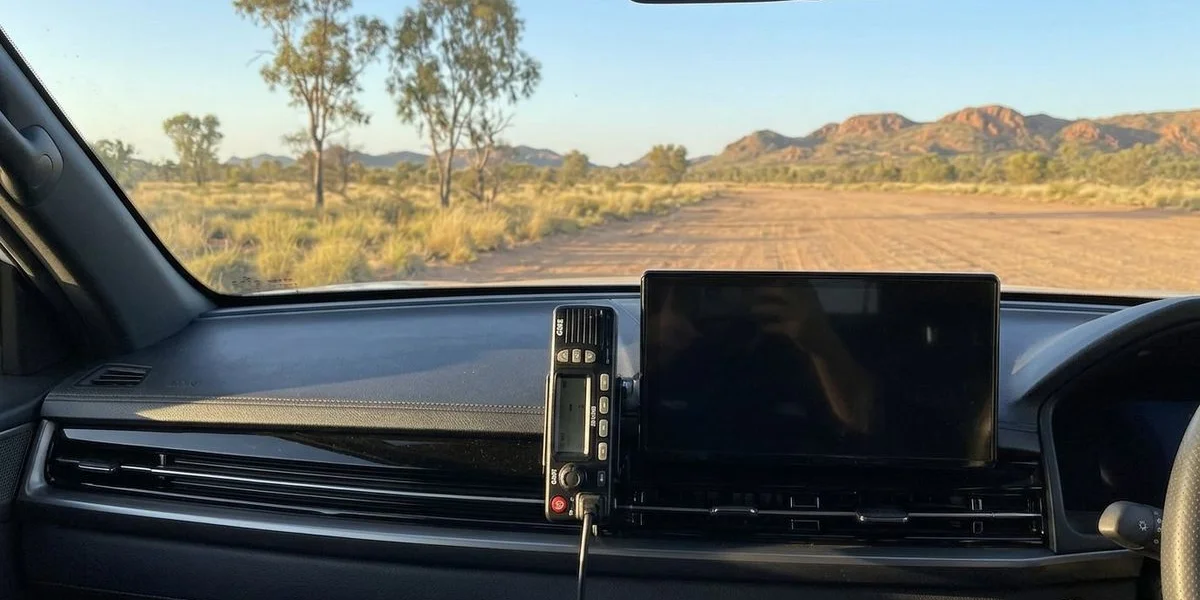
- UHF radio (CB): Channel 40 is monitored by truckies and other 4WD travellers. Essential for outback travel and useful for communicating between vehicles in a convoy. Our campers come with a UHF radio fitted.
- Personal locator beacon (PLB): sends a distress signal to emergency services via satellite. No subscription required, works anywhere in Australia. Every WA outback traveller should carry one.
- Emergency Plus App: This free app uses what3words to give emergency services your exact location (down to a 3-metre square) even if you don’t know where you are. Download it before you go.
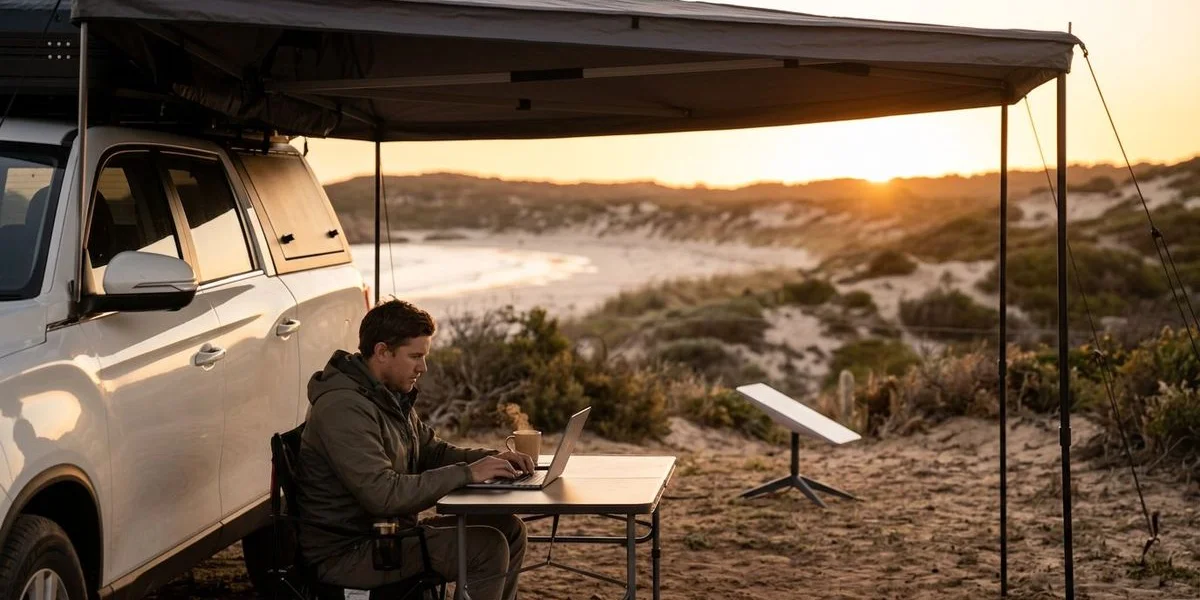
- Starlink: The game changer for remote travel. The “Roam” plan (100GB for ~$80/month) is perfect for travellers. The new Starlink Mini dish is compact enough to fit in any vehicle.
Practical Tips
Tell someone your plan. Before entering any coverage dead zone, send a text or call to a trusted contact with your intended route and expected arrival time at the next town.
Check road conditions while you have signal. Main Roads WA has a road condition reporting system. Check it while you have coverage. You won’t be able to access the live map once you’re on remote tracks.
Download entertainment. If you rely on streaming music, podcasts, or shows, download them before leaving coverage. The hours between Carnarvon and Exmouth are long, and your Spotify won’t work.
Save important information offline. Booking confirmations, campsite addresses, emergency numbers, and accommodation details should all be accessible without internet.
External Antennas and Signal Boosters
If you want to squeeze more out of weak signal, an external antenna wired to your phone or a mobile signal booster can make a real difference. They pull in faint signals your phone alone can’t lock onto.
The experienced overlanders we deal with tend to run the Cel-Fi GO unit. It’s the only active booster legal for use in Australia, and it can stretch your usable range by 20-50km from the nearest tower.
That said, in areas with genuinely no coverage, meaning no tower within range at all, no antenna or booster will help. There is no signal to amplify. This is where a satellite option like Starlink becomes the only answer.
The Bottom Line
If you’re staying in the Perth metro area and South West, mobile coverage is rarely an issue. Once you venture north of Geraldton or east of Hyden, treat mobile coverage as a bonus rather than a given. Plan for offline navigation, carry a UHF radio and PLB at minimum, and consider Starlink if staying connected matters for your work or peace of mind.
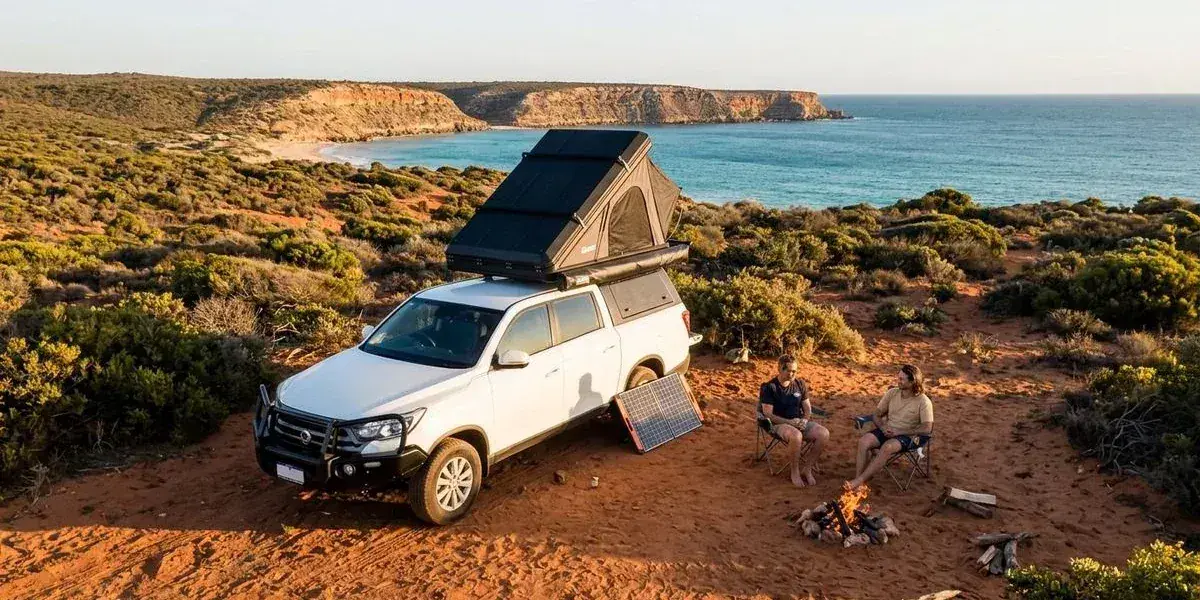
We hire Starlink units alongside our campers specifically because we know how limited mobile coverage is on many of WA’s best road trip routes. If you are heading north of Perth or into any remote area, it is the most reliable way to stay connected. Ask us about adding it to your booking.
Ready to Start Your Adventure?
Premium 4WD campers from $160/day. Depot pickup in Cloverdale, 5 minutes from Perth Airport.
Check Availability