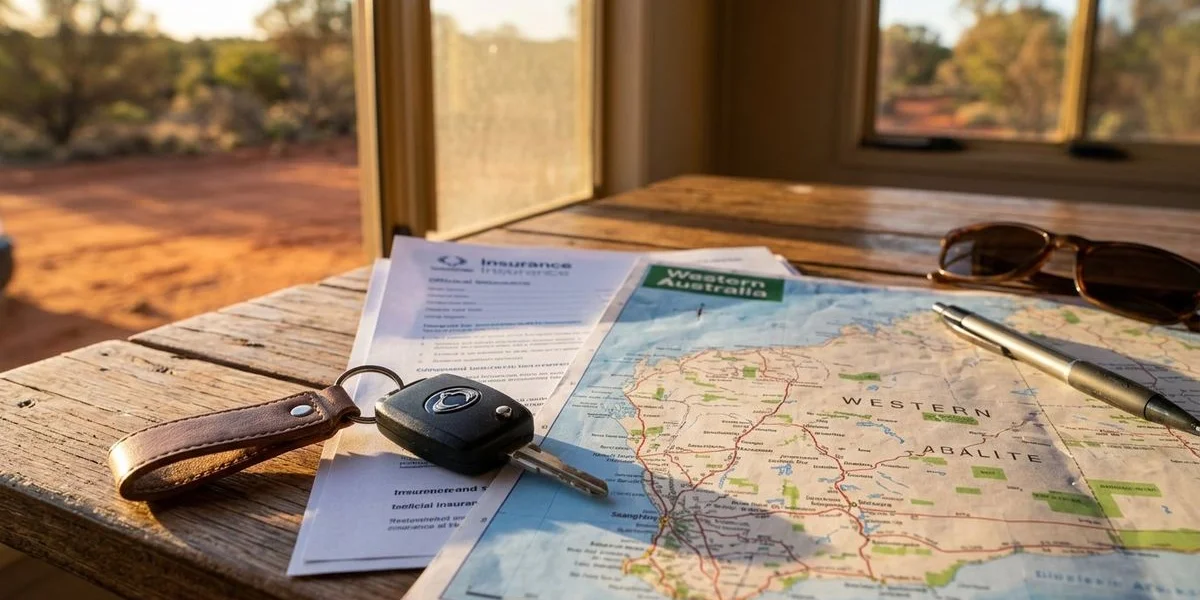
Understanding Camper Hire Insurance in Australia
Decoding camper hire insurance in Australia. Liability reduction, excess fees, why there is no cash bond, and how Camplify insurance works to protect your trip.

Dorian Menard
Founder & Owner
Insurance paperwork tends to live in the “too hard” basket until the day something goes wrong.
Before you point a 4WD camper at remote Western Australia, you want to know exactly what is covered, because the surprise on the other side is a financial one.
I have watched a small misreading of the Product Disclosure Statement (PDS) cost a traveller thousands.
Camper hire insurance in Australia does not work like a standard car rental agreement. Peer-to-peer platforms like Camplify have their own quirks, and you want those clear in your head before you collect the keys.
Here is how it actually works, and how to keep your bank balance intact.
How Camplify Insurance Works
Every booking we take through Camplify includes their insurance product in the daily hire price, so a camper hire in Perth with us is covered from the moment you collect the keys.
The cover is built around the specific risks of sharing private vehicles. It is underwritten by major insurers and aimed at the things that actually go wrong on an Australian tour.
The policy typically covers:
- Third-party property damage: Protection if you hit another car or structure.
- Vehicle damage: Repairs to the camper itself following an accident.
- Theft: Coverage if the vehicle is stolen during your booking.
- Natural events: Damage from hail, flood (within limits), or fire.
- Glass coverage: Repair or replacement of windscreens chipped by road debris.
- 24/7 Roadside Assistance: National support for breakdowns.
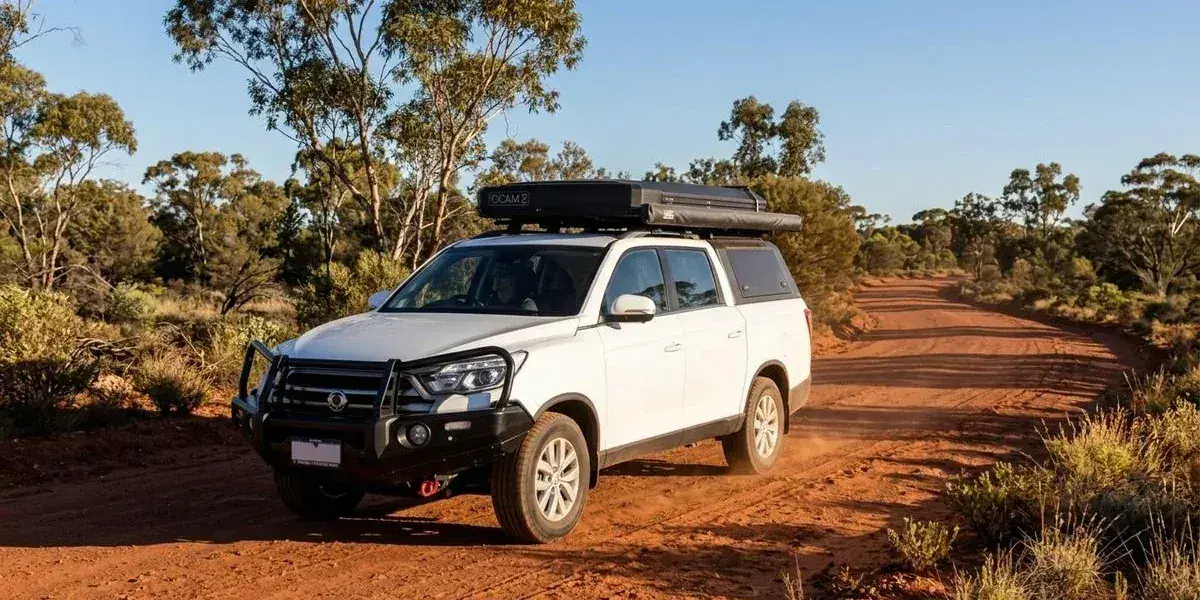
Most touring routes in Western Australia fall inside the “approved use” category. Sealed roads are covered as standard, and unsealed roads are covered where the operator has approved them for your route in advance.
Read that second part carefully, because it is where people come unstuck. Our own terms are typical of the market: unsealed roads need pre-approval before you leave, and hard-core tracks are excluded outright. On our vehicles that means the Gibb River Road, the Canning Stock Route and the Ningaloo sand tracks are off the table, along with river crossings and beach driving anywhere except Lucky Bay and Wharton Beach. Assume nothing, ask before you book.
Critical Exclusions: What Is NOT Covered
Every policy has limits, and those limits are exactly where you can end up holding the full bill.
The clauses worth reading twice are the ones about off-road use and environmental damage. Not knowing they are there is the single most common cause of disputes I see.
1. Overhead and Underbody Damage
Standard policies often exclude damage to the roof or undercarriage caused by driver negligence. Clip a low branch at a campsite, or scrape the chassis on a rock because you picked a track beyond the vehicle’s clearance, and that is usually on you.
2. The “Red Dust” Clause
WA is famous for its fine red Pindan dust, and it finds its way through seals that look airtight if you are not careful. Insurance generally won’t touch the professional detailing bill for heavy dust ingestion in the cabin or engine bay, and that bill can easily top $600. Use the vehicle’s fresh-air recycling settings properly and keep the cabin pressurised where you can.
3. Single-Vehicle Rollovers
Accidents with no other car involved get scrutinised hard. Insurers can deny a claim if the rollover came from dangerous driving, say speeding on gravel or over-correcting on a soft verge.
4. Water Submersion
A river crossing looks great on social media. It also voids your insurance the moment you drive through water deeper than the manufacturer’s wading depth, or into saltwater. Check the water level before you commit to any crossing.
5. Unlisted Drivers
Cover applies strictly to drivers named on the rental agreement. Hand the keys to a mate for a couple of hours and, if they are not registered, the policy is void the instant they pull away.
Is There a Bond?
Nothing trips up first-time renters more than the security bond, so here is the short answer: there is no cash bond on our campers.
Insurance, excess and roadside assistance all run through Camplify, under Camplify’s standard rules. If there is an accident, the excess you are liable for depends on the excess-cover option you choose when you book. Camplify explains the options on its accident excess page.
Claims don’t happen on a whim either. They go through a formal dispute resolution channel, and an owner can’t charge you without submitting evidence, photos and repair quotes, to the platform for review.
Excess and Liability Reduction
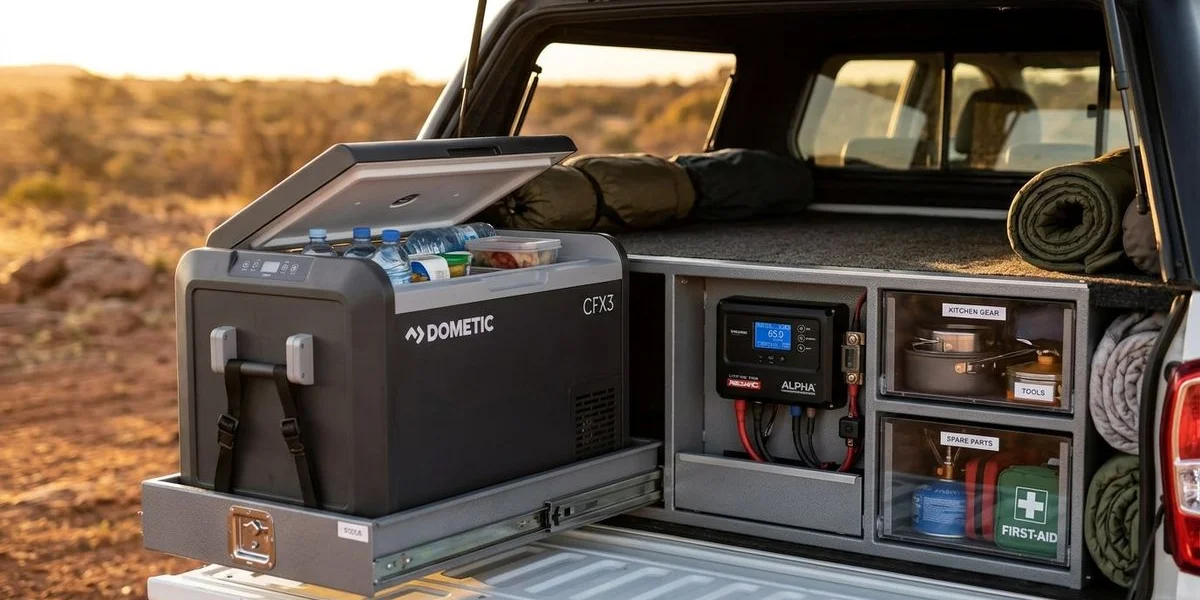
The excess is the most you pay if an accident happens. For our off-road vehicles, the standard excess sits between $3,000 and $5,000 depending on the camper. You cover the first slice of any damage bill up to that limit, and the insurer picks up the rest.
Is Liability Reduction Worth It?
You can pay a daily fee to bring that risk down. Packages vary, but they generally look like this:
- Standard Package: Included in hire. High excess ($3,000+).
- Silver/Mid-Tier: Costs ~$30/day. Reduces excess to ~$1,500.
- Gold/Premium: Costs ~$50-$65/day. Reduces excess to $0 or $500.
Whether to upgrade comes down to where you are going. For trips up the Coral Coast or inland to Karijini, I’d push you toward the premium option without much hesitation. A kangaroo strike at dusk or a windscreen shattered by a passing road train is far more likely up there. Replacing a single 4WD windscreen can run over $1,200, which makes the daily fee look like cheap insurance against a bad day.
24/7 Roadside Assistance Reality Check
Roadside cover is included, but a breakdown in WA is a different animal to one in the city.
We set our vehicles up to be reliable, but any machine can have a bad day. The included assistance covers:
- Towing: Transport to the nearest repairer (limits often apply to the distance or cost).
- Batteries: Jump-starts for flat starter batteries.
- Tyres: Assistance with changing a flat tyre (you must have a spare).
- Lockouts: Help getting back in if keys are lost or locked inside.
Out there, response times are measured in hours, sometimes days. A tow truck from Carnarvon or Tom Price won’t always be sitting idle when you call. Carry a satellite communication device, a Starlink Mini or a Garmin inReach, so you can reach support from outside mobile range. That is a safety necessity, not a luxury.
Pro-Tips to Avoid Extra Charges
We want every trip to end without a single extra charge, and most of it comes down to a few habits at pickup and return.
1. The Pre-Departure Audit
Take 50 to 100 photos of the vehicle before you drive away. Get the underbody, the windscreen, the roof gutters. That gives you proof of the exact state of the vehicle at handover, and it settles arguments before they start.
2. The “3-Bucket” Wash
Red dust bakes on and stains permanently if you leave it in the sun. Give the vehicle a solid wash before you bring it back. You don’t need to detail it, but shifting the bulk of the mud and dust stops the owner from billing you for “excessive cleaning.”
3. Report Incidents in Real Time
The moment something happens, send a message through the platform. Sit on a cracked tail light until the end of the trip and it looks like you were hiding it.
4. Fuel and AdBlue
Check the fuel policy on your booking confirmation. Most hires are full-to-full, and forgetting to top up means a surcharge on top of the fuel cost. Diesel vehicles also run AdBlue, so check whether that tank needs a refill before you hand the keys back.
The Claims Process Explained
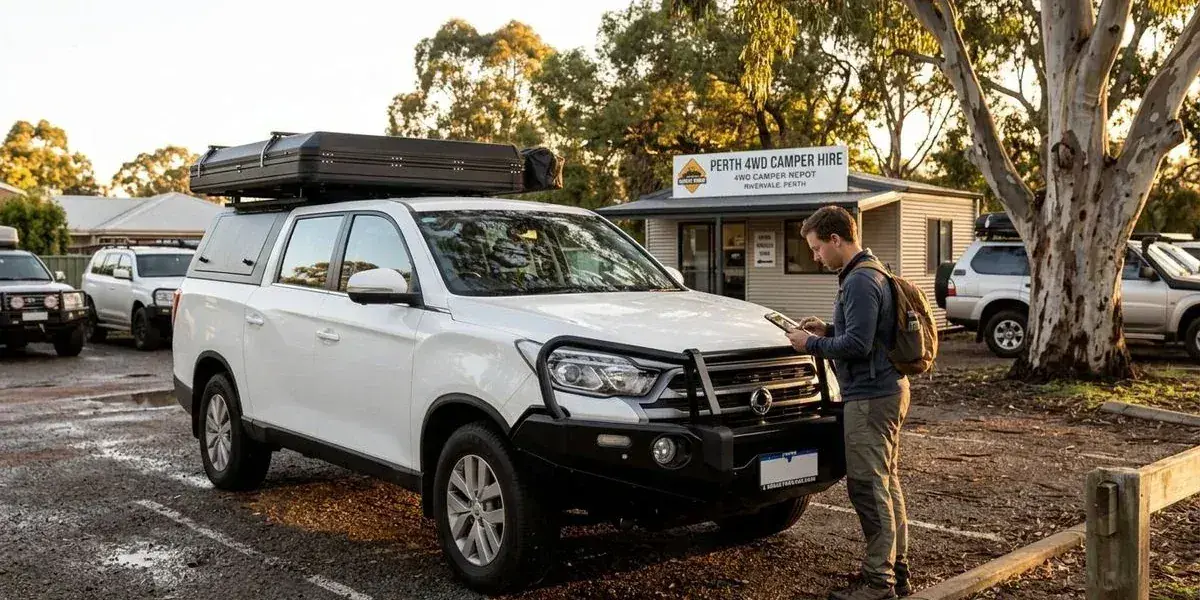
If something does go wrong, the process is built to be fair. When a vehicle comes back with new damage, we follow the same steps every time:
- Evidence Collection: We upload photos of the damage alongside the pre-hire photos for comparison.
- Notification: You receive a formal notification through Camplify detailing the claim.
- Assessment: The platform reviews the evidence to ensure the claim is valid under the rental agreement.
- Quotation: We source third-party repair quotes to establish the fair cost.
- Settlement: The agreed cost is settled through Camplify under its standard rules.
The platform sits in the middle as the neutral referee. If you reckon the damage was already there or just fair wear and tear, you have every right to dispute the claim.
Final Recommendations
Camper hire insurance is really about managing risk so you can switch off and enjoy the trip.
The standard inclusion is solid. For deep outback touring, though, the liability reduction is the smart play, and I’d take it.
The rest is simple: photograph the vehicle at pickup, drive to the conditions, and treat the camper like it’s your own.
If you are not sure whether a particular track on your itinerary is covered, just ask us. We can tell you if the route is approved and make sure you leave with the right recovery gear. Our Cloverdale depot is ready to get you on the road.
Ready to Start Your Adventure?
Premium 4WD campers from $160/day. Depot pickup in Cloverdale, 5 minutes from Perth Airport.
Check Availability