Best Paddle Boarding & Snorkelling Spots in WA
Top spots for paddle boarding and snorkelling in WA, from Ningaloo Reef to Rottnest Island. Gear hire tips and water safety advice.

Dorian Menard
Founder & Owner
Western Australia’s coastline runs over 20,000 kilometres. That is a lot of ground to cover.
Most people fixate on the driving distances when they plan a trip here. We tend to remind clients that the best bit usually starts once you park the vehicle and get in the water. The Indian Ocean serves up snorkelling and paddling that rivals the Great Barrier Reef, often without the crowds or the price tag.
You rarely need a boat to see world-class marine life in WA. Most of the best of it is reachable straight off the beach.
This guide runs through the spots we actually send people to, with the logistics, the timing, and the gear that makes or breaks each one.
Ningaloo Reef
Ningaloo is the reason a lot of travellers point the bonnet north. It is one of the world’s largest fringing reefs.
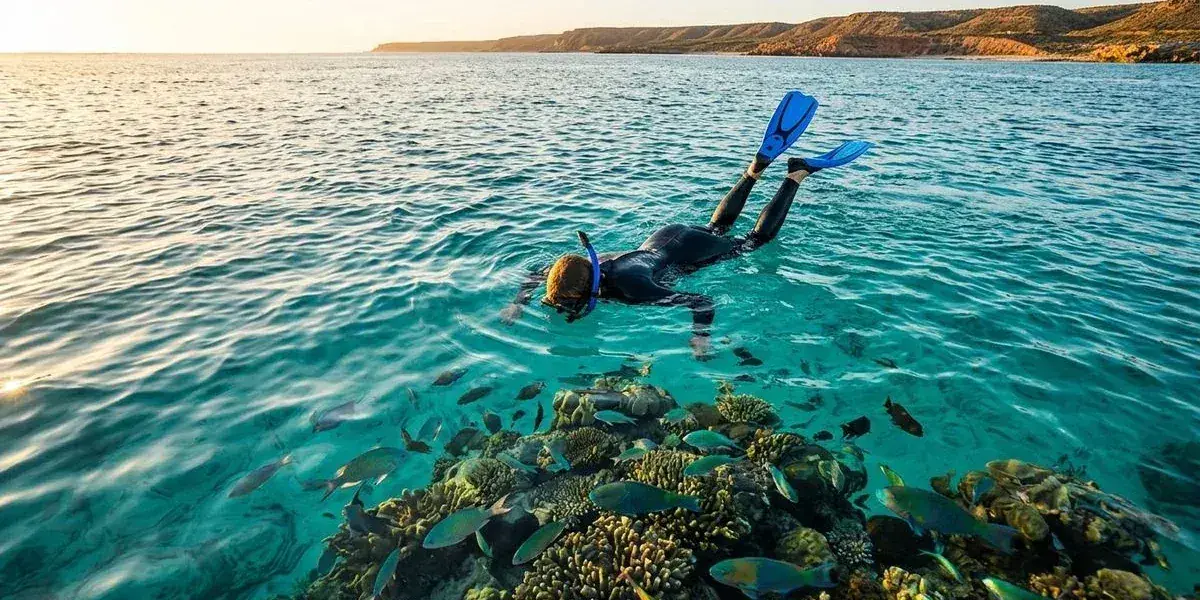
Unlike reef systems that need a two-hour boat ride to reach, Ningaloo sits right on the shoreline. Step off the sand and you’re over coral in seconds. Plenty of our visitors skip the expensive tours entirely because the shore snorkelling is that good.
Turquoise Bay
This location consistently ranks as one of the best beaches in Australia. The main draw here is the “Drift Snorkel.”
You enter the water at the southern end of the beach and let the current carry you north. It requires very little swimming effort. The current moves you over Staghorn coral gardens teeming with parrotfish, moon wrasse, and turtles.
Key Logistics for Turquoise Bay:
- Current Direction: Always swim South to North.
- Exit Point: You must exit before the sandbar curves out to sea. Strong currents occur past this point.
- Visibility: Expect 15 to 20 metres on a calm day.
Paddle boarding here offers a different perspective. The elevated view allows you to spot shovel-nosed rays resting in the sand patches that snorkellers often miss.
Coral Bay
Coral Bay is a single-street town that is incredibly accessible. The water at Bills Bay is protected by the reef, creating a giant natural swimming pool.
Families love this spot because the water stays shallow a long way out. You can stand in waist-deep water and watch fish swim around your ankles. Walk up to the shark nursery at Skeleton Bay (north of the main beach) between September and March and you’ll see reef shark pups cruising the shallows.
Oyster Stacks (Cape Range National Park)
This is a technical snorkelling spot that rewards preparation. The coral here is close to the surface and incredibly dense.
Critical Insider Tip: You can only snorkel Oyster Stacks at high tide. At low tide, the water is too shallow, and you risk damaging the coral or injuring yourself. Check the local tide charts at the Milyering Discovery Centre before you drive out.
Shark Bay World Heritage Area
Shark Bay feels prehistoric. The colours here are vivid, with rust-red sand meeting white beaches and turquoise water.
Hamelin Pool
This location is famous for stromatolites. These are the oldest living fossils on earth.
Stop here to break up the drive even if you don’t get in the water. It’s hypersaline, twice as salty as the ocean, so swimming isn’t really the point. The historic telegraph station next door makes a good history lesson for the kids.
Little Lagoon (Denham)
You will find this spot just outside the town of Denham. It is a nearly circular lagoon connected to the ocean by a small creek.
Conditions here are almost always flat. This makes it the perfect learning ground for paddle boarding. You’ll often see families set up for the whole day here, since the shallow edges are safe and the BBQ facilities are good.
Monkey Mia
Most people come here for the dolphin experience. Rangers supervise the feeding of wild Indo-Pacific bottlenose dolphins every morning.
There is an entry fee to the reserve, but it contributes to marine research. Once the crowds disperse after the feeding, the bay remains calm and inviting. Launching a paddle board here gives you a high chance of a private encounter with dolphins or dugongs further out in the bay.
Coral Coast
The stretch between Geraldton and Carnarvon gets treated as a transit leg by most travellers. Slow down here and you’ll find a few spots that punch well above their reputation.
Kalbarri River Mouth
The Murchison River meets the ocean at Kalbarri. This creates a safe harbour protected by a large reef system.
Mornings are the best time to paddle here. The wind usually picks up after 12:00 PM. A morning paddle offers silence and the chance to see pelicans landing on the glassy water.
Horrocks Beach
This sleepy town was named Australia’s #1 Beach in 2018. It remains relatively quiet despite the accolade.
A large reef shelters the swimming area, so the water stays calm even when the ocean outside is rough. The town has a friendly, low-key feel. Restock at the general store, then head out for a sunset paddle without the crowds you’d get at the bigger tourist hubs.
Perth and Rottnest Island
You do not always have to go remote to find great water. The metro area has excellent marine parks.
Rottnest Island (Wadjemup)
Rottnest is a Class A Reserve located 19 kilometres off the coast. You can take a ferry from Fremantle or Hillarys.
Comparing Transport Options on the Island:
| Transport Mode | Pros | Cons |
|---|---|---|
| Bicycle | Total freedom to explore small bays. | Hard work with heavy snorkel gear or boards. |
| Island Explorer Bus | Hop-on-hop-off access to all snorkel spots. | Can be crowded; rigid boards are hard to transport. |
The snorkelling at The Basin and Little Salmon Bay is exceptional. The Leeuwin Current brings warm tropical water south, so you will see tropical fish species here that are usually found much further north.
Mettams Pool (North Beach)
This is a natural aquarium located in the northern suburbs of Perth. The reef forms a protective ring that blocks the swell.
Get there early in the morning if you can. It’s a local favourite and parking gets tight on weekends. The depth sits between 1 and 2 metres, which makes it safe for kids or nervous swimmers.
Point Peron (Rockingham)
This cape offers rugged limestone scenery. The underwater topography includes swim-throughs and overhangs that advanced snorkellers will appreciate.
Paddle boarding here provides a great view of the Shoalwater Islands Marine Park. You might spot sea lions basking on the nearby islands.
South Coast
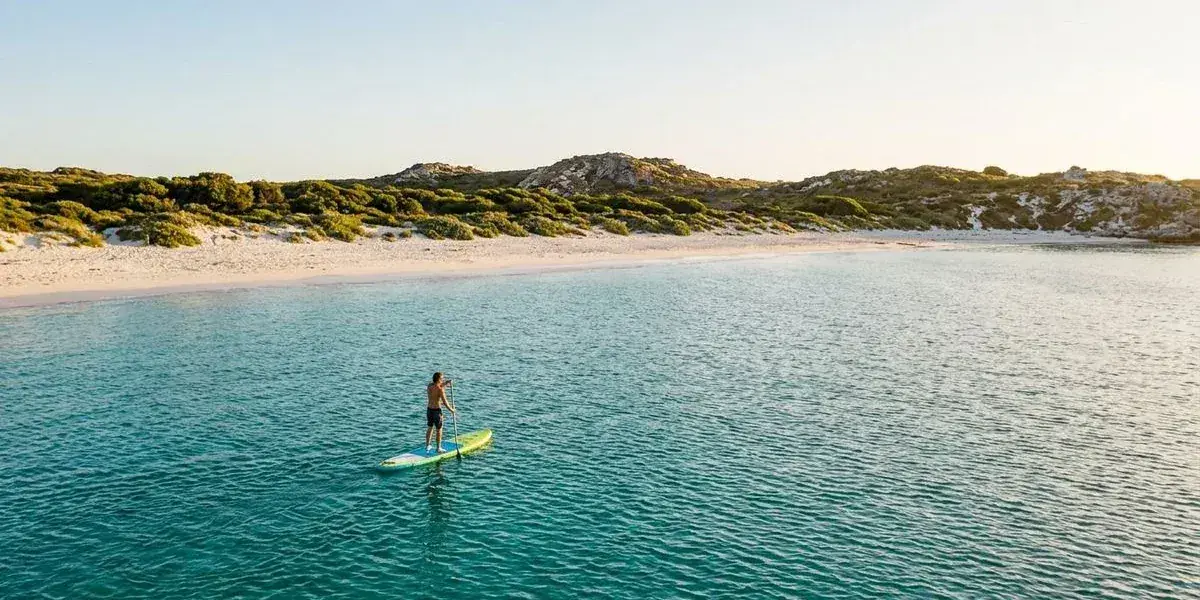
The water down south is cooler, but the clarity is unmatched. The white silica sand creates a brilliant blue colour that looks amazing in photos.
Lucky Bay (Cape Le Grand National Park)
You have likely seen photos of kangaroos on the beach here. It is one of the most iconic spots in WA.
The water temperature can drop to around 16°C or 17°C, so a wetsuit earns its keep. Snorkel the rocky headlands and you’ll often spot blue groper and schools of herring. Paddle boarding is the real treat here, though: the water is so clear you can see straight to the bottom even in the deeper sections.
Twilight Cove (Esperance)
This beach is located along the Great Ocean Drive. A large granite island sits just offshore, creating a channel of calm water.
The granite formations underwater are fascinating to explore. Just be aware that the South Coast is exposed to the Southern Ocean. Always check the swell forecast before heading out, as conditions can change quickly.
Gear Tips for Water Activities
The right gear is the difference between a good day and a frustrating one. We’ve watched plenty of travellers regret the cheap stuff they grabbed on the way out.
Paddle Boards
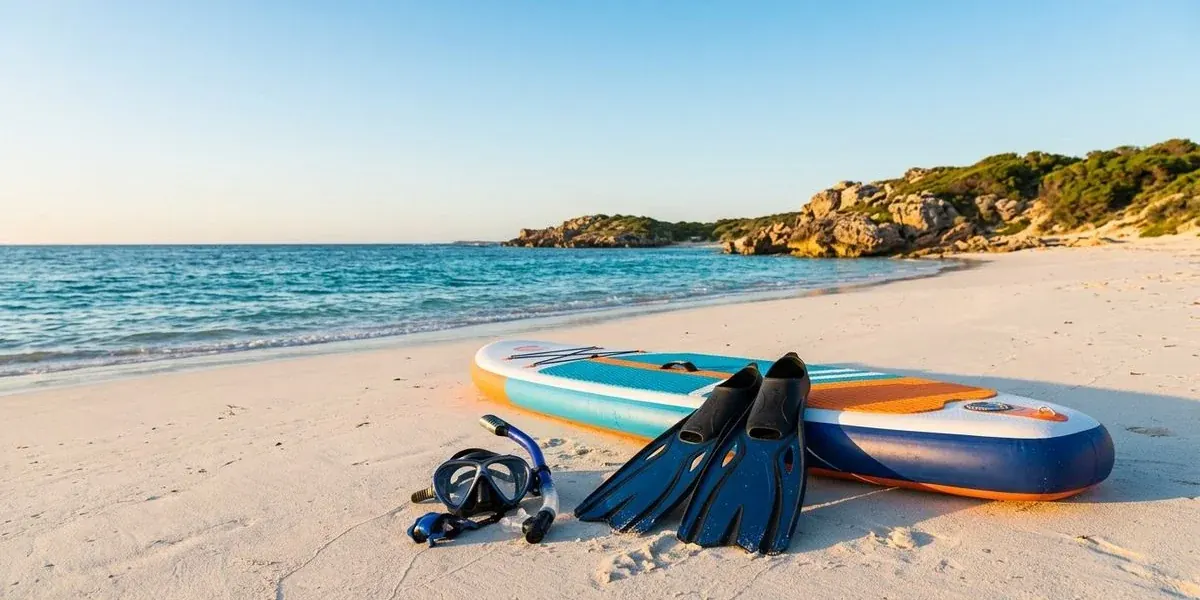
Inflatable boards (iSUPs) are the industry standard for travel. They are durable and pack down into a bag the size of a large suitcase.
Inflation Tip: Most boards need to be inflated to at least 12-15 PSI. If the board bends in the middle when you stand on it, it needs more air. We offer high-quality iSUPs with our vehicle rentals because they fit easily in the storage compartments.
Snorkelling Gear
A leaking mask is the number one thing that ruins a snorkel. Buy a silicone mask that actually fits your face shape before you leave home, and test it in the bathroom sink.
Fins are essential. They give you the power to handle currents and save your energy. Short “travel fins” are a good compromise if you are trying to save space in your luggage.
Safety Essentials
The ocean requires respect. Conditions in WA can be wilder than on the east coast.
- Understand the Sea Breeze: The “Fremantle Doctor” or southerly winds usually hit around noon. Plan your water activities for the morning.
- Stinger Season: Irukandji and Box Jellyfish can be present in the north (Exmouth/Coral Bay) from November to May. Local shops rent stinger suits.
- Sun Protection: The UV index here is extreme. A rash vest is mandatory for long sessions.
- Remote Access: Many best spots have no mobile reception. Tell someone your plans before you go.
Planning Water Activities into Your Road Trip
Timing is everything in Western Australia. The state is so large that it has two distinct climate zones.
We use this general calendar to help clients plan their route:
| Month | Best Region for Water Activities | Key Wildlife |
|---|---|---|
| Dec - Feb | South Coast & Perth | Orcas (Bremer Bay) |
| Mar - May | Ningaloo & Coral Coast | Whale Sharks (Exmouth) |
| Jun - Aug | Ningaloo (Coral Bay/Exmouth) | Manta Rays |
| Sep - Nov | Ningaloo & Shark Bay | Humpback Whales |
Build “buffer days” into your itinerary. If the wind is howling on day one, you’ll be glad you left a spare day to catch the calm.
Hauling water gear across the state is a hassle, we get it. If you’d rather skip buying and lugging it all, just say the word. We can pack premium paddle boards and snorkel sets in with your camper hire so you’re ready to hit the water the moment you pull up.
Ready to Start Your Adventure?
Premium 4WD campers from $160/day. Depot pickup in Cloverdale, 5 minutes from Perth Airport.
Check Availability